
EP45: How freelancers can look after their mental health & their money
A practical and heartfelt chat, with essential advice for freelancers from expert Matthew Knight.
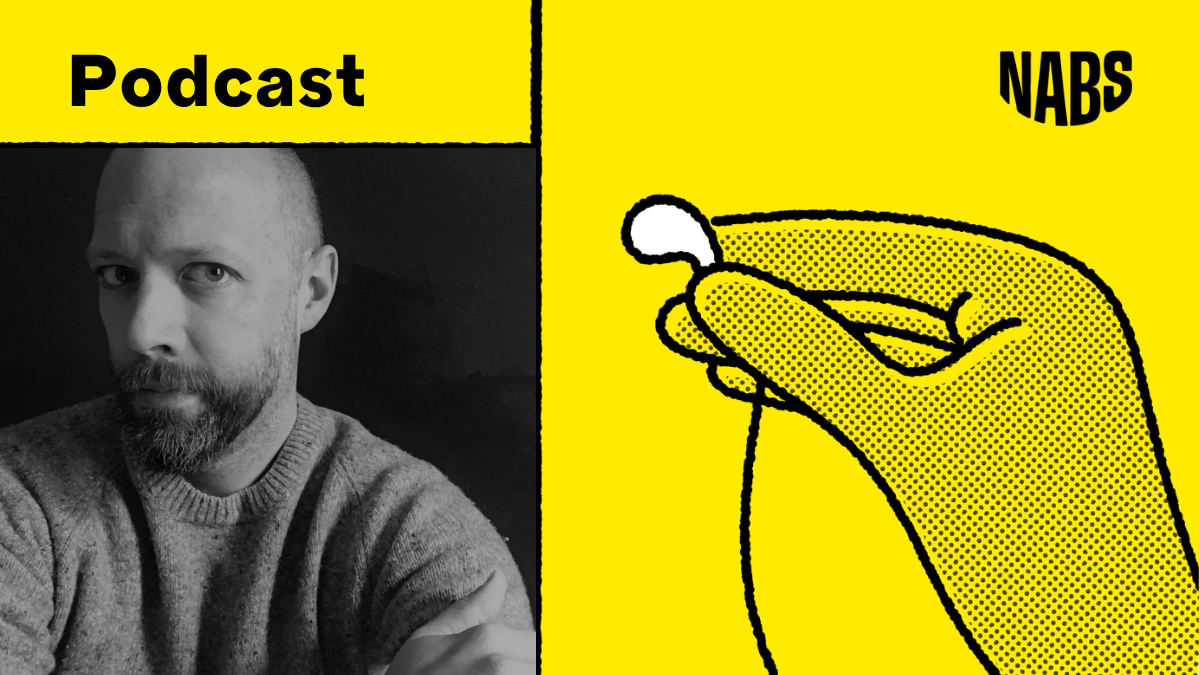
How freelancers can look after their mental health & their money – with Matthew Knight
Matthew Knight is a freelance strategist and founder of Leapers, an initiative that supports the mental health of freelancers.
Matthew is a leader in this field and his award-winning work has supported more than 250,000 freelancers in the last decade, informing policymakers, communities and hirers.
Also a single working parent, Matthew somehow found time in his schedule to guest on the NABS Podcast and we’re so glad that he did. This is a brilliantly practical and heartfelt chat, with no-nonsense yet empathetic and essential advice for freelancers and hirers of freelancers alike.
Key takeaways:
Taking care of yourself ensures that you can continue to work – it’s a critical piece of your wellbeing
Practise the ABC of freelancing mental health: Active Awareness, Behaviours and Boundaries, and Community and Connection.
Increasingly, people are turning to freelancing through circumstance, for example redundancy: this makes seeking out support even more important.
Show notes
Resources:
Freelance support for freelancers: https://www.freelancing.support/
Mental health support for freelancers: https://www.leapers.co/
Resources for organisations/hirers: https://www.workwellwith.us/
Freelance communities for parents: https://www.doingitforthekids.net/freelance-communities/
NABS Advice Line: https://nabs.org.uk/get-help/
Louise (00:02.017)
Today my guest is Matthew Knight. Matthew Knight is a freelance strategist, chief freelance officer at The Independence Co and founder of Leapers, a project that supports the mental health of freelancers. Matthew is a member of the Mental Health at Work Leadership Council, chair of the Independence Community Coalition, and he’s currently focused on Freelance Friendly, a policy framework for working well with freelancers.
Matthew’s award-winning work has supported more than 250,000 freelancers in the last decade. It informs policymakers, communities and hirers. Matthew’s also a dad of two and he lives in London. And you’ve made time for us today amongst that very busy life. Welcome, Matthew, to the NABS Podcast. It’s ridiculous, but also very impressive. And amongst all of that, how are you doing?
Matthew Knight (00:44.211)
Ridiculous. Ridiculously long list.
Matthew Knight (00:52.130)
Fine. Okay. Getting on. You know, it’s a uniquely British question, and the traditional answer is “fine” because actually the other person isn’t really that interested in knowing. It’s just the way to start the conversation. But it quite often surprises people when I’m honest about how I’m doing. It’s been a challenging few years, right? And I think we’re all feeling things getting harder, regardless of our situation. With everything that’s going on in the world, it would be a lie to say that everybody is thriving. And I think that’s a big part of the reason why I do what I do, because actually we need to be having these conversations with each other, just to check in.
Louise (01:37.195)
Yeah, exactly. It’s what the podcast is all about. When I ask people how they are, I genuinely want to know. I don’t want “fine” through gritted teeth. I want an open mouth and an honest answer.
Matthew Knight (01:46.423)
You know, I think there’s an importance to stepping back at times from your own situation and from everything that’s going on in the world, and taking a bit of a deep breath. Get outside the house, especially when you’re freelancing and you work from home a lot of the time, just to walk around the block. I’m a big fan of putting a commute back into the day. We don’t generally have that as freelancers, so it’s important to be able to take that breath.
I think it’s important to say, hey, there is a whole load of challenging stuff going on at the moment, and that’s okay. It’s okay to recognise that you’re feeling things, that you might have stress on you, and not to ignore it but to acknowledge it. It’s when you get stuck in the muddy puddles and you can’t get out of it, and you’re wallowing in it, that it becomes a real challenge. Or if you don’t have people around you to help pull you out of that mud. But I think it’s actually quite important to accept that there is a hell of a lot of stuff going on at the moment. It is a really challenging context, from an economic and commercial perspective, from an industry perspective, and from society generally, because ignoring it is when it does start to cause problems.
Louise (02:58.047)
Yeah, striking that balance, isn’t it? And trying to look after yourself within that, which we will talk about and which will be super valuable. Aside from the general challenge that is life at the moment, can you tell us about a mental wellness challenge that you’ve had to face and how you’ve worked through it?
Matthew Knight (03:15.084)
Yeah. I mean, gosh, where do you want to start? I have a long history of challenging mental health personally. For 15 years, probably a little bit longer, I have struggled with things like depression and anxiety.
Going through Covid was incredibly challenging as well. I run a number of projects that support the mental health of others, and I think I took a lot of that on my own shoulders, which was probably not too sustainable.
Recently — and this is a very, very recent situation — about 12 months ago, I found myself in A&E. I had literally passed out. I was not able to stand for any longer than a few hours without getting very light-headed. I found myself on the floor and then in A&E for 48 hours. They couldn’t find anything wrong. I was hoping they would find some sort of thing that they could just give you a pill for, or put stitches around, and it would all be okay.
The cardiologist came in and said, “Have you been under any stress recently?” I said, “Yeah, I’m a self-employed single parent. Yes.”
It was — I would be lying if I said it was a wake-up call, because I knew where I was. It was something called vasovagal syncope, which is a very complicated way of saying your nervous system has taken over. If you’re not looking after yourself, Matthew, your body will give you a rest. It will put you on the floor and it will tell you to take some time off.
It was just an incredible, overwhelming amount of chronic, ongoing stress that I hadn’t been managing. Mental health issues started to affect my physical health and meant that I was unable to work. For someone who is self-employed, who doesn’t have paid sick leave or paid holiday leave, that’s an incredibly scary position to be in. I was literally WhatsApping clients from the hospital bed to say, “Sorry, I can’t join that call tomorrow,” or, “I can’t deliver that project,” which added even more concern because, okay, I’m turning down work. I’m turning down income now, not knowing when I’ll be able to take the next project.
I’ve tried to use that experience in two ways recently. One, obviously, is to change behaviours myself, to recognise that I need to be putting more rest and support systems in place and giving myself a bit of a break, less of a hard time. But also to use myself as an example, that even those of us who talk about mental health all the time, who are supposedly held up as, “Matthew knows his stuff. He’s been doing freelancing for a long time,” get it wrong as well. We’re not perfect. And if it can be a useful reminder that helps nudge someone else into saying, “Actually, maybe I should give myself 15 minutes or that walk around the block,” to take care of ourselves as professionals, then that’s really important. Because even if you don’t care about yourself, you probably care about your income, and making sure that you can continue to work is obviously a critical piece of your own wellbeing.
Louise (06:48.981)
And your kids and the people around you as well, right? You need to be around for all of these people depending on you.
Matthew Knight (06:51.854)
Absolutely. It’s such a cliché, isn’t it? Put your own oxygen mask on before helping others. But it is essential. I think it’s easier said than done. It’s very easy for us to use platitudes and send out a resource saying, “Go and take some time off,” or, “Go and do something you enjoy and have a break.” It’s so, so easy to say those things. In reality, it’s so much harder to actually do that.
We run weekly calls for freelancers just to get a bunch of people together to share some of the experiences they’re going through. One of the common themes we hear is that people really struggle to give themselves permission to take a break, to step away from the computer and to look after themselves a little bit. Because every minute you’re not working, maybe you’re worried, “I’m not being productive,” or, “I’m not finding that next client project.” If you’re not working, you’re having to chase the next gig.
Even if you are busy, there is a huge amount of stress from managing client projects, relationships and the responsibility all being on you, or having to chase those late-paid invoices and that additional administration. It’s really complicated. You don’t have people disappearing for their lunch break sitting next to you when you’re self-employed. You don’t have a manager tapping you on the shoulder and saying, “How are you doing? Are you okay? Can somebody else step in and give you a bit of support on the project?” You don’t have the nine-to-five systems and structures that remind you to get up, go into the office, leave the office and come back home. You don’t have the little micro-interactions of nodding to the security guard when you walk through reception. There are lots of things you don’t realise you don’t have when you’re freelancing. We have to put those things in place for ourselves. If you’re doing that on top of doing the work, finding the work and chasing the invoices, then it can really start stacking up. Sometimes you need somebody else to tap you on the shoulder and say, “Don’t forget that you’re pretty important in this whole system as well. Make sure you’re taking care of your own wellbeing.”
Louise (09:05.815)
So, for the purposes of anyone listening to this podcast right now, you are that person tapping on their shoulder saying, “Hey, have you taken a break?” No? What’s the answer?
Matthew Knight (09:15.496)
I’m not that person, right? No, I don’t think so. I think it would be worrying for everybody to be reliant on me. The big thing we try to say really is: find those people you need to have in your system, your support network. That might be communities, fellow freelancers, clients or professionals. It’s not about me doing it. It’s about building your support system so that you do have people doing that.
That system might change over time. What I try to do is nudge people and encourage people to proactively think about putting those things in place. Because you don’t get a leaflet when you sign up to self-employment. You don’t get a brochure that says, “Here are the things you need to go and do.” The government tells you about paying your tax and doing your tax return at the end of the year, but they don’t necessarily tell you that it’s really important to put these systems in place to take care of yourself.
So I’m very happy to be the person who nudges people and says, “Hey, you need to go and think about doing these things.” But every person is different. They need support in different ways. They get it from different kinds of people. Their circumstances and context are different. But if I can be a little bit annoying and poke and provoke people every time, I don’t mind doing that.
Louise (10:33.323)
All right, well, consider this your poke if you’re listening. I think we can agree on that. But also, the fact that you’re talking about it — and if you can now tell us a few mechanisms that you’ve developed to help you not get back to where you were, on the floor in A&E — what are those little, easy things you’re doing now? And how do you poke yourself to remember to do those things when it’s just you sitting at your desk by yourself?
Matthew Knight (10:58.892)
Google Calendar. You know what, that is my biggest hack — life hack, if you want. I put reminders in my calendar to have lunch, drink water, go outside and do certain things every week. We’ve built this simple mnemonic to help people think about the things they can do when they’re self-employed: the ABC of freelancing mental health.
The A is Active Awareness. So, just putting aside 15 minutes every week to check in with yourself and say, “Actually, how was this week and what made me feel that way?” This is where Google Calendar helps me. I have a little thing in my calendar that reminds me. It pings and I go, “All right,” step away from the laptop for a minute, take those 15 minutes and just go, “What happened on Monday? What happened on Tuesday?” I write in my journal. Taking those notes gives you 15 minutes to reflect and take a bit of a breath.
It also helps you notice patterns. Every time a client texts me after 6pm, it makes me feel a little bit annoyed, which the following morning makes me less eager to engage with them. Or every time I go to bed a little bit too late, I have a really rubbish day the next day. Maybe that’s an insight into how I should work. That Active Awareness helps you pick up those patterns.
The B is Behaviours and Boundaries. So if I’ve learnt what my triggers and influences are around how I’m feeling over the course of a week, what things can I put in place to rectify them? Behaviours are things I can do: I know that when I hit about three o’clock or four o’clock, I probably need to step away from the machine. So I’ve gone to reduced days to give myself a little bit of a break in the evenings and afternoons. That’s a behaviour I can put in place.
But also boundaries, because a lot of the influences around our mental health come from external sources — things we’re not necessarily in control of — but we can put some systems in place. Take clients, for example. Perhaps we want to communicate to our client, “I’m not available after three o’clock. Please don’t put an invite in, or if you do email me, I’m not necessarily going to come back to you.” Putting those boundaries in place helps protect your own well-being and also builds stronger relationships with your clients, because you’re saying, “This is how I work.”
C is Community and Connection, probably the most important. I’m really working hard at the moment to reach out to people I love, who support me and check in on me. I’m spending a lot more time trying to see people face to face rather than digitally. I’m leaning back into the community work I do to support others, because that helps me too, and it helps me hear how others are working and how they need support.
It’s about feeling that I’m not doing this on my own. I’m very fortunate. I’m a member of a lot of really fantastic peer support communities focused on freelancers. I know that I can pick up the phone or DM another community member, or even the host of those communities, to say, “I’m struggling a little bit. Can you just get me out of my head? Can you validate this idea or give me a bit of input?” Knowing that there are others who have not the same experiences, but are in a similar context — we’re on parallel journeys — is incredibly useful.
Louise (14:30.985)
NABS is a huge believer in the power of community. That’s why we bring people together for workshops and events, because we know about the mental wellness benefits of just being together, learning and connecting. So, loads of good stuff there, Matthew. Thanks for sharing all of that.
Now, obviously, you founded Leapers and you’re at the coalface of supporting mental wellness and freelancers in our industry, and NABS and you do loads of work together to support that community. What are you hearing about the challenges that freelancers are facing to their mental health? What would you pick out as the top challenges?
Matthew Knight (15:11.118)
We’ve been doing an annual research project for the last seven years, and we try to ask some consistent questions so we can see how things change over time. We’re interested in how the last 12 months were for you as an individual. So we ask about things like your income, how you’re feeling and how clients have been treating you. We also ask a whole bunch of background questions as well, to understand things like how you entered self-employment, and how supported you feel by peers, government and clients. We try to understand the general sense of how people are feeling and their relationship to self-employment.
A number of things came out of our most recent research, which was published at the start of this year. Number one was a significant decline in overall wellbeing and self-reported mental health scores. Around 40% of the people we spoke to — and we spoke to over a thousand freelancers — said that they felt their mental health had declined in the last 12 months. That’s a huge number. Almost half of that group felt they were not doing as well as they were the previous year.
There are obviously many complicated factors feeding into that, particularly within our industry — the creative industries, advertising and marketing. Generally, there’s been a lot of disruption around things like redundancies and changing roles, and obviously there’s the economic climate. Everybody has different reasons for reporting that, but a 40% decline within self-employed groups is an alarm bell that we need to be looking at.
The second really significant change is that we always ask: did you choose to step into freelancing? Was this something you actively wanted to do? Or did you find yourself in freelancing or self-employment because of circumstance? Over the years we’ve been doing this, it was always tracking at around 15% of the group who didn’t choose to step into freelancing. Last year, it was somewhere between 30% and 35%. So almost twice the number of people are finding themselves in freelancing not through choice, but through circumstance.
That includes things like redundancy. But also people who are parents or carers, or who have long-term health conditions, are increasingly finding that employment is not necessarily supportive of the way they need to work. Sometimes freelancing or self-employment is the only way they can generate an income.
That combination — people being pushed into freelancing, the overall mental health decline — and the third thing, which we’re constantly trying to tackle, and I know you are as well, is a feeling of lack of support. People don’t know where to turn for resources, advice or direction about starting out as a freelancer, about self-employment, and also around their mental health. They don’t know who to ask.
That steep learning curve, combined with being pushed into it without necessarily having a choice, plus the fact that it’s harder out there at the moment, is significant. A lot of freelancers saw their income decline in the last 12 months as well. Day rates are being depressed. Clients perhaps are able to pick and choose who they’re working with. It’s becoming a little bit harder. We’re hearing that anecdotally as well — a lot of freelancers saying the last couple of years have just been harder. There’s a lot more ghosting happening, even at the level of basic manners: if you’ve been asked to apply for something and then you don’t get an email back.
There’s probably a lot more competition as well. If there are more people freelancing, that means there may be fewer pieces of work to go around for individuals. The thing I’m really keen to explore, though, is that there are two parts to this conversation. There are obviously the freelancers themselves, what they’re feeling and the support infrastructure they need. But there’s also those who work with freelancers: the hirers, employers, agencies and so on. I want to know what role those of us who hire freelancers can play in supporting those individuals.
I think the next 10 years are going to be really interesting as we ask this question: if the industry is moving more towards using freelancers, if we’re not employing people as frequently, if it’s smaller, leaner teams and we’re leaning upon freelancers, what responsibility do hirers have to support, nurture and engage those freelancers so they can do their best work? This is not just a nice-to-have, to treat people well. This is about their productivity, creativity and sustainability. I think we need to redesign how we look after our people in the industry — not just employees, but everyone. And mental health is such a huge part of that.
Louise (20:21.269)
It strikes me that there’s a lot of work to be done there. If we’re at a stage where ghosting is popular and it’s hard to even get an answer out of somewhere, then getting to the stage where we’ve got people who work with freelancers actively supporting their mental wellness feels like a way off — but it’s something we really, really need to get to, especially with the large numbers of people becoming freelance.
You’ve named a number of challenges there. If someone is in this position where they don’t know how to get started, or they’ve suddenly found themselves thrown into freelancing via redundancy and they have all of the feelings around that, as well as coping with all of the logistics and the fallout of redundancy — if someone’s basically feeling all at sea, what should they do to get help? Should they contact Leapers? Where else should they go?
Matthew Knight (21:04.887)
I think the first thing to do is turn to someone you know who freelances, actually. Because we all know a freelancer. We’ve all got one in our friendship group or our network. Say, “Hey, I’m stepping into this. Can I just have a coffee? Can I have a cup of tea? Can we just have a phone call so I can ask you a few questions about the things on my mind and the things I didn’t know I needed to ask?”
If you don’t have anybody in your network, then communities are a brilliant next step. That fellow freelancer you speak to may well be able to point you in the direction of some fantastic platforms, communities and spaces where there’s a whole host of us — maybe we’re early in our freelancing careers, maybe we’ve been doing it for a very long time. In my experience, they are so helpful and keen to support you and give you advice, wisdom and their own experience.
Stepping into those spaces is invaluable. Even if you say nothing or ask nothing, you’re overhearing really valuable conversations: how others are approaching things, or things you didn’t realise were part of the process. Even if you’re feeling absolutely fine, being able to support others and give them advice and support is really valuable. Being in the space, being with other people who get it, who have been there, done that to a certain extent, matters.
There’s a big difference between calling up a friend who’s in a job and saying, “I’m really stressed at the moment. I’ve got so much work on my plate,” because quite often the response is going to be, “But you’ve got unlimited holiday, surely? Can’t you just take a break?” Freelancers know that’s not necessarily the case. So being in spaces where there are others in a similar situation, who work in the same ways, is incredibly valuable.
It’s also a brilliant place to find work. A lot of hirers now are turning to communities to post their jobs, gigs and briefs directly into communities because they know this is a trusted little space where there are brilliant people, rather than LinkedIn where you can get 600 comments and have to trawl through those. Hirers are increasingly building their own little networks, private pools and community spaces where they’re sharing work.
So it’s really supportive, really informative and it can lead to work. That’s where you get the permission slips as well. We talked earlier about not having permission a lot of the time. Sometimes someone in that community space can go, “Oh, it’s three o’clock, I’ve had enough, I’m going out for a walk,” or, “I’m finished for the day.” Maybe that’s all the nudge you need to go, “Yeah, actually, I’ve done enough today as well. I’m going to step out.”
Louise (23:46.806)
Loads of good tips there. That feeling of permission. We’re having a conversation where we’re acknowledging all of the difficulties that come with freelance life, and it’s absolutely correct that we do that. But it also strikes me that we should look at the positive within this conversation, which is: if you need to knock off at three o’clock, you can. Let’s just take a moment to celebrate that and the mental wellness benefit that it can bring. Have you found that liberating?
Matthew Knight (24:19.202)
Absolutely. I think my job is definitely to highlight some of the challenges, gaps and concerns so people are better prepared: when it does happen, they’ve already got a plan in place, they know where to turn and they’ve got a bit of support.
I do that because I think there is a bit of an over-adjusted narrative around how amazing freelancing is and how flexible it is: you can work for four hours a month in your pants at home, make a million dollars and everybody’s happy. The reality is somewhere between those two.
But what I think freelancing does provide for a lot of people who have chosen to work that way is control. I don’t think necessarily freedom, but control: the ability to say, “Actually, I need to, or I want to, work these hours, or in this location, or in this way,” and actively design how you want to work around your own needs.
Maybe you’re a parent or carer. Maybe you have vulnerabilities. Perhaps you just don’t want to be on the commute. You don’t want to have to deal with toxic employment cultures and that kind of stuff. Maybe you want to turn down certain kinds of work. Maybe you’re not happy working on certain types of clients or certain ways of working with others. That ability to choose what you work on, how you work, when you work and where you work is probably the main driver for the majority of people who are freelancing. And that is to be celebrated.
What we try to encourage people to do is use a freelancer wellness action plan, which is just a couple of pages where you write down how you work, what your red flags are and what your boundary lines are, so it’s a bit of a plan you’ve got for yourself. You can look back at it and go, “Yeah, I’m falling into that trap,” or, “I need to remember to do these things.”
The first block, the first question, is: why do you work in this way? Actually listing out a few of the benefits and reasons why you work in this way is important. Maybe that is being able to finish at three o’clock. Maybe that is going for a swim in the middle of the day. Maybe it’s to spend more time with your children or your friends — there are a whole host of different reasons for different people. And that should be celebrated.
When you are struggling a little bit, looking at those things and going, “Yeah, okay. Today was hard because work is not always a paid hobby for most of us, but it does mean I can finish at three, or it does mean that I can have an extra-long weekend, or have that bit more sense of control,” can be helpful.
However, that doesn’t come out of the box. You don’t just sign up to be self-employed and magically have that flexibility and freedom. You have to design those things. You have to put those things in place. You have to unlearn some of the ways you were working in employment and put that flexibility, system and structure around it.
If you want to have afternoons off at three o’clock, that means you have to communicate it with your clients. It doesn’t mean you just walk out the door, because the email is going to be there and it’s going to be pinging notifications on your phone, and that’s going to add stress, not remove it. It means you have to plan ahead for when you want to take time off. You can’t just go, “I’m going away.” You still need to let your clients know you’re not going to be around, put an out-of-office on, think about maybe taking your email off your phone so you’re not checking it, or bringing a buddy in so they can answer emails while you’re away. You have to put in a little bit of extra effort in order to get that reward. It does take a bit of extra effort, but the reward is significant.
Louise (27:58.892)
Yeah, absolutely. It’s about being really intentional with your design. And something I’ve often talked about with colleagues at NABS is that it’s all very well having boundaries, but if you’re not communicating them, then you may as well not have them. You do have to have a certain — I’m not sure whether it’s confidence — but just such a belief in your boundaries that you’re able to communicate them to a client knowing that they may say, “Well, that might not work for me.”
Matthew Knight (28:26.550)
Yes. We were having this conversation very recently about clients demanding that you’re working on site, for instance, as a frequent frustration. People say, “I’m a freelancer. You can’t tell me when or where to work.” Both sides can ask. A freelancer can say, “I want to work in this way,” and the client can say, “Well, I want to work in this way.” If they don’t connect, you both have the right to say no and step away from it. There’s no given, no mandating.
That is what self-employment is about. You don’t have to accept a mandate from your boss, manager or company. You can choose to say no, but that comes with the possibility that you might need to step away from that work and not take that income. And therein lies the rub, right? It’s very privileged to be able to say no. You can only really do it if you have enough income, if you’ve got emergency savings, if you’ve done well that month. A lot of the time, if you haven’t been working for a couple of months, you don’t always have that freedom and flexibility to say no.
So it doesn’t come baked in. You’re running a business. You have to be far more commercial. You need to be thinking about accounting, marketing, admin and your pipeline. A lot of people step into freelancing because they want to focus on their craft, which is brilliant, because they’re craftspeople. But that’s a part of the job, not the whole thing.
That’s why it’s so important not to be doing it alone. If you haven’t got the first clue about tax, you need somebody in your support network who does. If you don’t understand the first thing about marketing, then you need somebody in your support system who does, so you can learn from others. You can learn and develop your skills and lean upon others. You don’t have to be doing it all yourself. You’re responsible and accountable for making sure it happens, but that means you can have others who can support you.
Louise (30:18.081)
You also need to treat your employee well, your employee being yourself.
Matthew Knight (30:21.867)
Absolutely, yeah.
Louise (30:23.317)
I wanted to pick up on the fact that you’re a single parent. What we often hear on the NABS Advice Line from single parents in the industry — and this is usually from single parents who are in permanent jobs — is that their employers don’t always, sometimes but not always, realise the unique challenges that a single parent might have. For example, all of the drop-offs and pickups are on you if your kids live with you most of the time. There is more of a load on you generally.
I was wondering whether there are any particular challenges for single parents in freelance life that we could address and talk about how you might work through.
Matthew Knight (31:02.178)
Yeah, and I would probably invite my colleague Frankie, who runs a community exclusively for freelancing parents, to add some insights to this conversation. This is one of the benefits of being part of communities, because there is a whole host of other people going through exactly this.
One of the interesting things about being a freelancing parent is guilt: the recognition that sometimes you have to work and put your kids in front of an iPad, or not be as present with them. That’s very significant for a lot of freelancing parents, whether you’re a single parent or in any other situation. We hear that a lot in our communities, around that feeling of, “Daddy has to work,” or, “Daddy has to be on this meeting,” and how that causes challenges.
The other thing — and I think this is both a benefit and a challenge — is school holidays. As we’re recording this, we’re a few days before the Easter holidays. We’ve got two weeks off, and then you have six weeks of summer, two weeks of half-term and another week. Sometimes it can feel like, when do I actually get the work done?
However, on the positive side, on one of the calls we had recently, someone was saying, “Actually, I have to have compressed days because the kids come home at three o’clock and I need to be focused on them.” Sometimes that can create focus. It means, actually, I’m going to be focused and productive during the hours that I have for work. Then I put my work down and I’m mindful and focused on the kids. Sometimes that structure is really beneficial. It means you need to take half-term off as opposed to just working through all the time.
Again, it comes to intentionality. It comes to design. It comes to thinking about how you want to work and how you can manage both of those things, and not holding yourself to the same level. You’re not going to be able to do the classic nine-to-five or 100% productivity all of the time. But it does come with a unique set of challenges: things like parental leave and not having the same kind of maternity pay are obviously more challenging. We don’t have the same rights when it comes to those sorts of things.
If you find yourself in that situation, we’re unfortunately seeing a lot of people who return after maternity leave and then find their role made redundant and are pushed into freelancing. We also see a lot of parents step into freelancing because they want to design work around their kids. You need to do it with open eyes, really. You need to understand what additional challenges that will have. But I’m going to get very boring and come back to things like community — having others who understand it and asking those questions. I know I’ve really benefited from being in communities like Doing It For The Kids and asking those questions, where other people have gone, “Yep, this is how I approached it.”
Louise (34:00.406)
We will put a link to where people can find out more about Doing It For The Kids, as well as all the links for Leapers and the organisations that you’re running as well. So people know, okay, this is where I can go and start asking questions and find out how I can design a working life that might work for me.
Now, we’ve touched on how you can support freelancers if you’re on the other side of the coin. I think separately we’ll have a longer conversation about that on another episode, because there’s so much to say. But just more quickly now, if we’re thinking about leaders who’ve got freelancers in their teams — and we’re looking at increasing numbers of that — what are just a couple of really practical tips you could give those leaders about how they can support the mental health of those people?
Bearing in mind, those leaders are probably already completely overrun, really stressed out about their own position, maybe dealing with redundancy in their teams and organisation. They have an absolute boatload of things to think about. Now we’re asking them to support the mental health of the freelancers in their teams. But they need to, so what can they do that’s quick but effective?
Matthew Knight (35:02.518)
Three things, because I love doing things in three. Number one is signposting. If you do nothing else, we’re asking any organisation that hires freelancers or works with freelancers to signpost to support. Over 60% of freelancers, as I mentioned, don’t know where to find resources and support for their well-being at work, or even just for getting started and running a business and freelancing.
So if you do nothing else as an organisation that hires freelancers, signpost to resources. Signpost to NABS. We have a platform called Work Well With Us, which is a free tool they can signpost their freelancers to. It’s got resources on why mental health matters more when you’re a freelancer, 15 things you can do as a freelancer to take care of yourself, the ABC, and key topics, themes and issues you might face. That’s something organisations can give to their freelancers for free, at zero cost. Immediately that freelancer goes, “Oh, thank God, I’ve got this resource. I can go and find NABS. I can go and find this community platform. I know where to turn.”
So number one would be signposting. Include it in your onboarding. It costs nobody anything. At the very least, your freelancer has somewhere to turn.
The second thing is the principle called “do no harm”. We’re not asking hirers to put on pizza parties or yoga sessions or wellbeing days — arguably, whether they work or not is another podcast episode, I’m sure — but to think about the behaviours they have that have a negative impact on their freelancers.
I’m thinking about payments. Pay fairly and pay on time. There is still a huge number of freelancers who face late payments. Their invoices go in on time; 30 days pass. They’ve done the project, they haven’t been paid. They have to wait a month for the due date to come, and then the money still doesn’t come in. It can be up to 25 days late on average in the UK. We’re talking billions of pounds being paid late to individuals and small businesses in the UK. It’s a huge issue. For many freelancers, that can be the difference between paying their rent or not.
Think about the things you do as an organisation that might have a negative impact on the individual. Sort out your payment processes. Ghosting: if you have asked somebody to write a proposal or apply for a gig and then you don’t bother getting back to say, “Sorry, the gig has gone away,” that’s going to have a negative impact on their well-being. Think about communication, onboarding and contracts. Make sure you have a contract with them. Also think about things like diversity and inclusion: how can you bring people into your organisation who add value, who might have different perspectives, and make them feel welcome when they come in? Make them feel like they’re an expert and they’re bringing new ideas. All of these simple things, which actually don’t cost you anything as a business but are just about process, can incredibly support your freelancers and their mental health, and also help your business.
We’ve found two things. Number one: 97% of freelancers who’ve been treated badly by an employer or hirer will not work with that business again. Because they’ve got the choice, right? They will go, “Actually, last time they didn’t give me onboarding, they didn’t reply to my emails, they treated me really badly, they paid me really late. I’ve got another business offering me a job. Who am I going to pick?”
Around the same number, about 96% of freelancers, tell their friends. They will say, “Don’t work with this business because they’re really hard to work with. They pay late.” We all talk. This is a small, tiny industry, right? We’re all hyper-connected. That’s going to make it harder for you as a business to hire brilliantly talented freelancers. You’re going to have to go back out and find others. That’s going to cost you time and money.
By working effectively with people, you’re reducing your talent costs. You’re reducing the time it takes to find people. You’re reducing the risk of bringing new people in. You’re building relationships and your reputation with those freelancers. It doesn’t take much: paying them on time, paying them fairly and having contracts in place. It’s all the good stuff you should be doing anyway, without any additional costs.
Then you can go further. We’re seeing brilliant businesses that are really leaning into recognising, “This is our model now. We have a lean core. We have a network of friends, associates, alumni — whatever you want to call them — that we bring in as expert talent when we want to build a team and deliver a project.” Relationships and reputation are essential there. They’re doing more. They’re building their own communities. They’re providing resources. They’re throwing events and building a real familial relationship with people. I think that’s where we’re going. The businesses building those relationships are the ones I think will win out in the future. But if businesses aren’t willing to go to that extent, that’s fine. Start with signposting. Start with making sure your freelancers are not being harmed by your behaviours.
Louise (40:02.093)
Absolutely. And in your signposting, do signpost to NABS. You’re going to love the next question. How does the adland community lift you up?
Matthew Knight (40:13.850)
I was thinking about this because obviously we had a chat before we recorded today, and I think it’s such a wonderful question. There have been a number of moments where colleagues, friends, partners and strangers have been really supportive when I felt really challenged.
I remember during Covid there were some amazing community groups that just sprang up. Projects. People were stuck at home. It hit freelancers especially hard because we didn’t have furlough. We were able to work from home already, so we were a little bit better set up for those sorts of things, but commercially it was challenging for a lot of us. Suddenly, really social groups popped up. A lot of them were local, so people in your area that you could go for your one hour of walking a day with. A lot of that was within our industry. We’re all friends of friends. The connections and the support made available in those times were really valuable.
The other, more recent example was when I was in A&E. A client supported me, actually. They knew I was unwell. They were one of the WhatsApp messages I sent to say, “I’m sorry, this has happened. I’m not going to be able to deliver.” They were really supportive. They were really understanding. They even sent me a little gift pack, a kind of care pack, to look after me. That is something they didn’t have to do, but it really stuck with me. I really appreciate that. I just felt seen and cared for. It was very, very human behaviour.
That is because of the relationships I’ve built with people within this industry. Love it or hate it, I think there is very human, deep relationship-building in our industry. We go through the tough pitches, the weekend work and the rubbish emails from clients, and that creates a camaraderie. I really love that. I’ve built lifelong friends and relationships with people in this industry. I think those are the connections that really matter.
As we move into Zoom calls and Trello and Slack and all that kind of stuff, it’s important that we remember those human connections are really crucial, and we almost double down on those things. AI is amazing in many ways and challenging in others, but if we remember to build those relationships, the human connections and the people we’re working with — that’s what really creates support.
Louise (42:44.269)
Absolutely. What’s one thing you’ve learned about how to support yourself?
Matthew Knight (42:51.992)
Can I say Google Calendar again?
Louise (42:53.749)
Yes, you can. We’re all about the practical tips.
Matthew Knight (42:55.470)
I think repetition and habits are helpful. Having a bit of a routine, having a bit of a structure, is one of the things a lot of people actively want to step away from when they step into freelancing. They don’t want to have the routine and the structure, but actually having some systems in place is incredibly useful.
The alarm clock that goes off on a Friday to remind me to reflect, the little notifications on my phone to remind me to drink — the systems and structures I put in place and design — don’t always work. I’m useless at setting habits and I endlessly feel like I’m redesigning what is working for me and what those life hacks are. It’s a constant learning journey.
But I think having some systems in place so I’m not having to constantly think about it is helpful. There’s the Barack Obama thing, where he supposedly wore the same suit every day so he didn’t have to think about it and could focus on other things. I think there is some benefit in having those sorts of systems, which means I can focus on my work and focus on myself.
The other thing is having kids. When they need a snack or dinner, there’s not much you can do to escape that. So there is real benefit in having someone tugging on your shoulder, or when there’s a Zoom call or whatever. Those external people remind you that not everything is on the screen, and not everything is about work. It’s about the balance. We work to have a wonderful life, rather than the other way around.
Louise (44:32.417)
We do. And I think it’s really important to remember that, especially when times get a bit tough. But we know that if you’re a freelancer and things get a bit tough, you can get in touch with Leapers, and there is support and help out there for you.
Matthew, you have been spectacular. So much insight. Thank you so much for joining us today.
Matthew Knight (45:00.568)
Thanks, Louise.
Louise (45:01.342)
And I shall look forward to a further conversation with you. Remember to check the show notes and reach out for help if you need it. Matthew, thank you so much. You’ve been great.
Matthew Knight (45:10.360)
Thanks, Louise. And thanks for all the work that you and your team do at NABS. I think it is an organisation whose support I have benefited from for a long time. I don’t think enough freelancers recognise and are aware that NABS is there for you as well. The resources you have on your site, the workshops and webinars, and the education and training work you do to improve lives for all of us, are very much appreciated. So thank you from the freelancing community too.
Louise (45:38.411)
Thank you so much. It’s what we’re here for.